
Our investment in Facet Amtech: Rethinking how the world makes ammonia
August 28, 2026
Editor’s note: This piece was co-written by Grace Bird, who worked alongside Emerald Scofield on this investment. Our website only supports a single author byline, but this reflects their shared work with Peter and James over the past eighteen months.
A century-old process we still depend on
.webp)
Ammonia is one of those molecules most people never think about, despite depending on it every day. It is the basis of nitrogen fertiliser and, by extension, a huge part of the global food system. Roughly half the world’s food production depends on synthetic nitrogen fertiliser.
Australia is particularly exposed. We consume around 8.7 million tonnes of fertiliser a year, worth A$5.5 billion, and import 91% of it. When fertiliser markets move because of gas prices, geopolitics or disruption to global shipping, Australian farmers don’t have many alternatives. They pay.
That makes ammonia more than an industrial commodity. It sits underneath food security and increasingly energy security too, with ammonia emerging as a potential fuel for shipping and a way of moving and storing renewable energy. The strange thing is that we still make almost all of it using a process invented more than a century ago.
Haber-Bosch is very good at what it does. That’s why it has survived for so long. But conventional ammonia production relies on fossil fuels both for energy and, critically, as the source of hydrogen. Green ammonia replaces that fossil-derived hydrogen with hydrogen from electrolysis. It solves the emissions problem, but adds significant cost and equipment.
For us, that raised a more fundamental question: rather than making the existing process cleaner, could you simplify the process itself? That’s what made Facet Amtech interesting.
It started with something that wasn’t supposed to happen
We met Peter Richardson through Erich Kisi, co-founder of MGA Thermal, who had worked closely with Peter for years. One of the things that stood out to us about Peter early was that he’s a learner and a do-er, not a knower. We mean that as a real compliment. Deep tech is full of problems where nobody knows the answer yet. The people you want working on them are the ones who are relentlessly curious enough to find it.
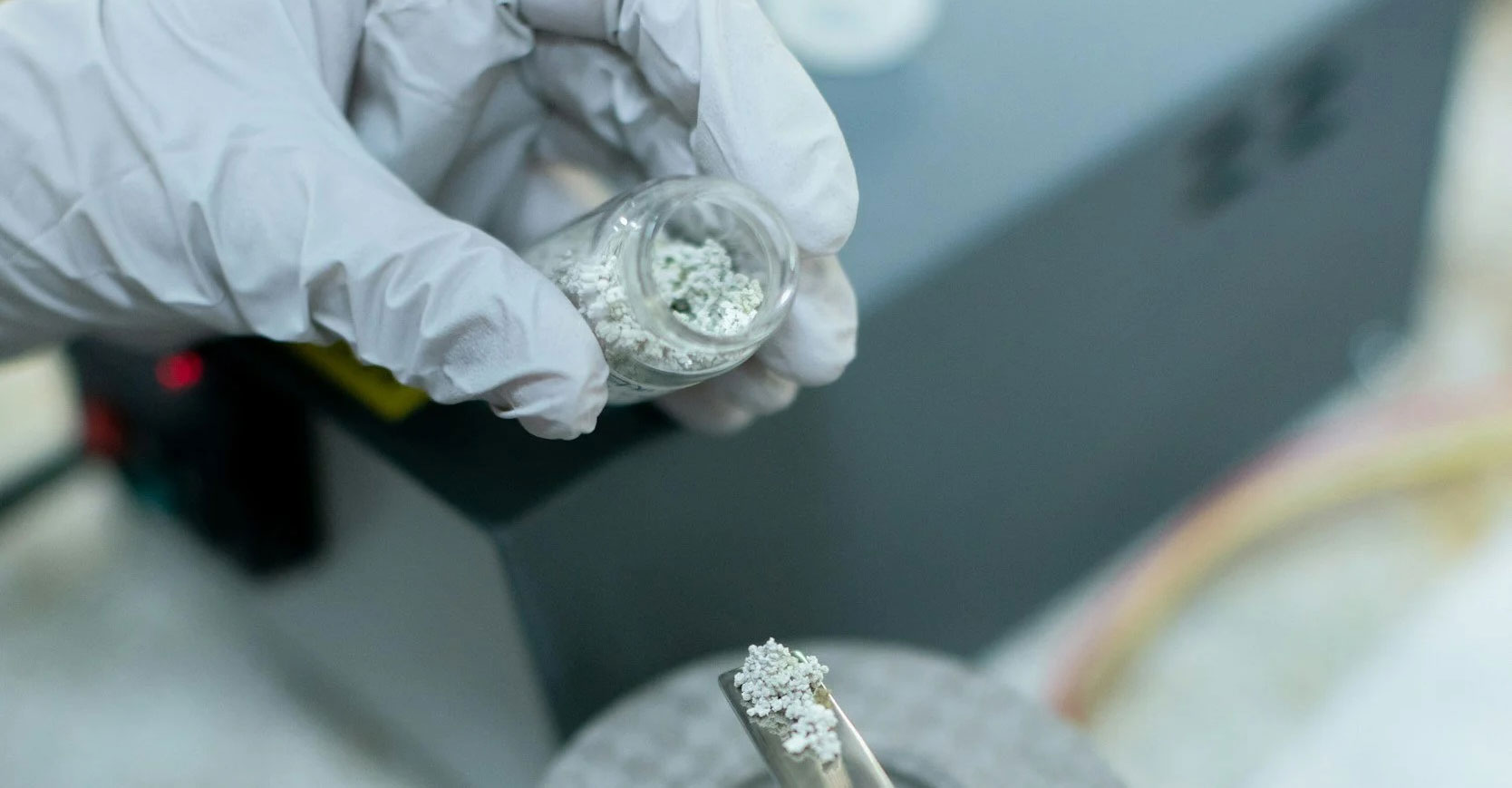
Facet started with one of those problems. Peter and his team had developed a catalyst for an entirely different application involving high-risk industrial testing. During routine testing, the catalyst went into water. They detected ammonia. It wasn’t what they were looking for, and it wasn’t something the catalyst was supposed to do.
Peter kept pulling on that thread. Initially, the opportunity looked relatively modest: perhaps the catalyst could improve the efficiency of existing Haber-Bosch plants. But there was a much more interesting possibility buried in the observation: what if water could actually be the hydrogen source for making ammonia?
If that worked, you wouldn’t need to produce hydrogen separately before making ammonia. You could potentially remove an entire process step, and a substantial part of the equipment, energy use and cost that comes with it.
Peter brought in James Bradley, co-founder of Diffuse Energy, to work through what that could look like as an actual process. They’re a good pairing. Peter is deeply grounded in catalyst science and relentless on execution. James is the systems thinker and tinkerer, the person who looks at a reaction nobody has industrialised before and starts asking what you actually have to build around it.
That was the idea they wanted to test and the question we wanted to back them to answer.
The first cheque was really an experiment
We first backed Facet through our pre-seed fund, Atmosphere in September 2024. At that point, there were plenty of reasons the technology might not work. That’s normal at this stage. What mattered was figuring out which question to answer first. For us, it was simple: does steam genuinely work as a feedstock?
So the first investment was structured around answering that question. The results gave us enough confidence to keep going.
That didn’t mean Facet had suddenly proven a new industrial ammonia process. Far from it. There were still questions around catalyst manufacturing, repeatability, reactor design, scale-up and durability whether the economics would survive outside the lab. But it was enough to earn the next experiment.
That’s largely how we’ve worked with Peter and James over the past eighteen months. They prove something, we work together to understand what it unlocks and what risks are ahead, and then they tackle it head on. We leant in where we can be useful, making introductions across industry and workshopping what the technology could become. But Peter and James have done the hard part: turning a very strange scientific observation into a company that could reshape an industrial process that the world relies on.
Why the process matters
The easiest way to understand Facet isn’t through the catalyst. It’s through what the catalyst could remove. Today, before you make ammonia, you generally have to make hydrogen.
In a conventional plant, that hydrogen typically comes from natural gas through steam methane reforming. In green ammonia, it comes from water through electrolysis. Both approaches then feed that hydrogen into the ammonia production process. Facet is trying to collapse those steps.
Its catalyst is designed to use water and atmospheric nitrogen to produce ammonia without first building a separate hydrogen-production system. That matters because hydrogen production is a huge part of the cost and complexity of an ammonia plant. In Australia, gas alone can account for around 70% of conventional ammonia production costs.
If Facet can remove that step at industrial scale, the economics start to look very different. Early modelling suggests substantially lower upfront capital requirements and operating costs, with the potential for production costs well below conventional fossil-based ammonia.
They’re early numbers. There is still a lot to prove. But Peter is also one of the least promotional founders we’ve come across. So when the technical results and the economics both started pointing in the same direction, we paid attention.
Eighteen months later
Since that first investment, the team has demonstrated repeatable catalyst performance, scaled production of the catalyst at high purity, moved out of the University of Newcastle into its own facility and secured NSW Government support to continue scaling manufacturing.
The question is no longer simply whether something interesting is happening in a lab. It’s whether you can engineer a system around that chemistry, manufacture it reliably and ultimately make ammonia at the scale and cost the industry requires.
Their next step is the first pilot plant. That’s a much harder problem. It’s also exactly the problem we want them working on.
Why we’re backing them again
Deep tech investing can sometimes get presented as a hunt for breakthrough technologies. But that’s not quite the right frame. A breakthrough gets you interested. What matters after that is whether a team can systematically turn scientific uncertainty into engineering progress.
That’s what we’ve watched Facet do over the last eighteen months. Not everything is proven. We don’t know yet what the final plant looks like. We don’t know exactly where the economics land on a commercial scale. And there is a long way between a catalyst working in a lab and changing an industry that produces hundreds of millions of tonnes of product every year.
But the team has retired enough of the right risks that our conviction has increased. And importantly, the original question has survived contact with the evidence: can you make ammonia without first building an entire system to make hydrogen?
Eighteen months ago, we thought that question was strange enough and important enough to fund. Today, there is considerably more evidence behind the answer — and a much harder set of engineering questions ahead. That’s why we’re investing again.
There’s a bigger reason we care about this too. Ammonia sits underneath our food system and could increasingly sit underneath parts of our energy system. Yet Australia remains heavily dependent on imported fertiliser despite having the scientific capability, renewable resources and industrial base to make much more of it here.
Facet is the kind of company we want to see more of: deep science coming out of an Australian university, paired with serious engineering, aimed at a strategically important industry. We don't think Facet will be the only answer. We’re interested in other bets across the ammonia stack too, in much the same way we’ve approached quantum: building conviction in a problem and backing different approaches to solving it.
What comes next
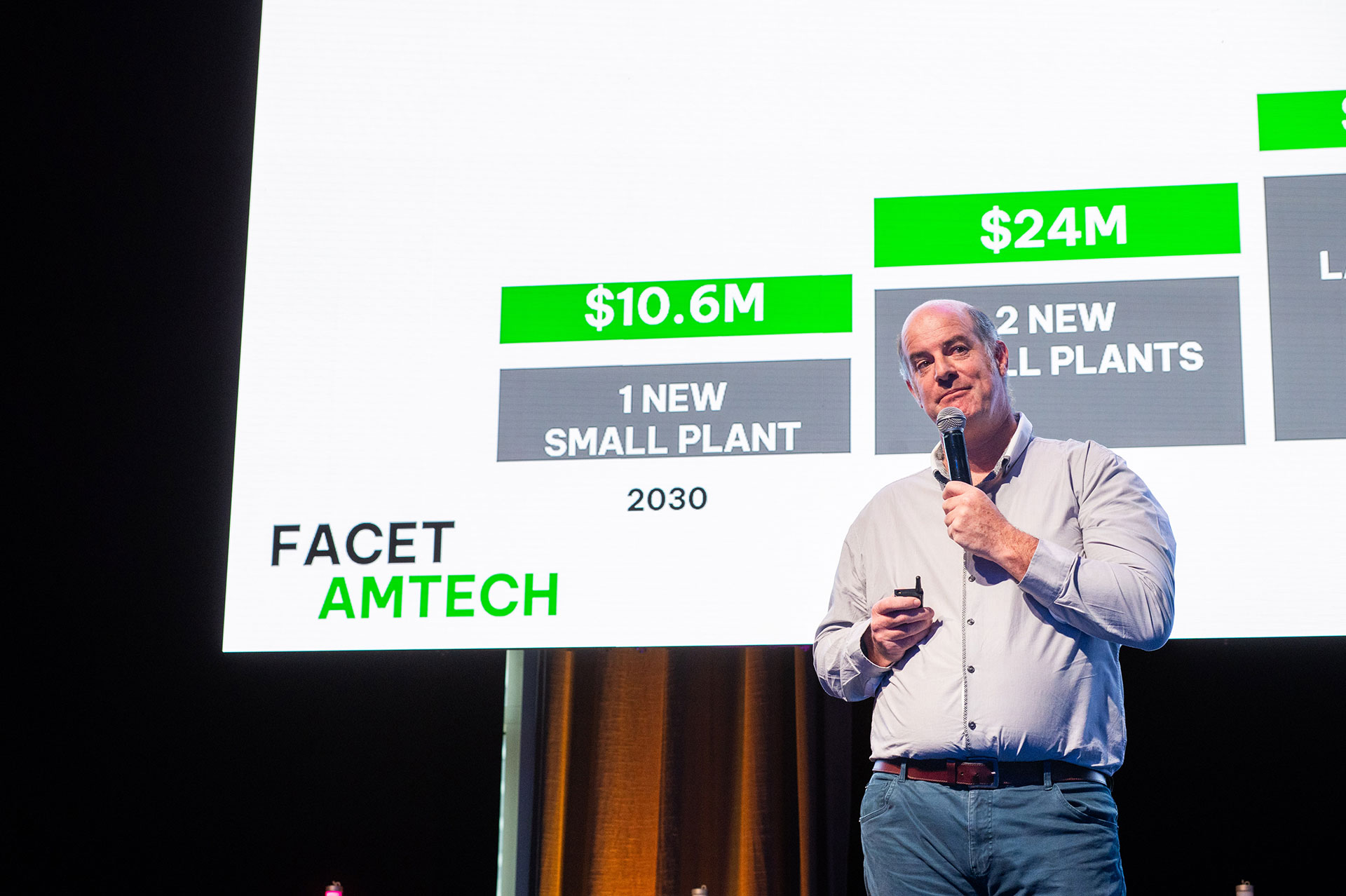
This $3 million round, backed by Main Sequence and Uniseed, gives Peter and James the capital to answer the next set of questions. They’ll grow the team across R&D, engineering and commercial leadership, build the first pilot plant and bring in independent technical validation.
Eighteen months ago, we were looking at a catalyst doing something in water that it wasn’t supposed to do. Today, there’s a team, a facility, a process and a vision being built around it.
The next question is whether it can become a plant.
Written by

Emerald Scofield
Investment Manager
WHat to read next
.jpg)

Ben Hansky
October 7, 2025


Elaine Stead
July 15, 2025


Danielle Haj-Moussa
June 13, 2025
WHat to read next

Danielle Haj-Moussa
October 2, 2026


Tara Pereira
August 27, 2026
Danielle Haj-Moussa
August 10, 2026
Stay in Touch
