
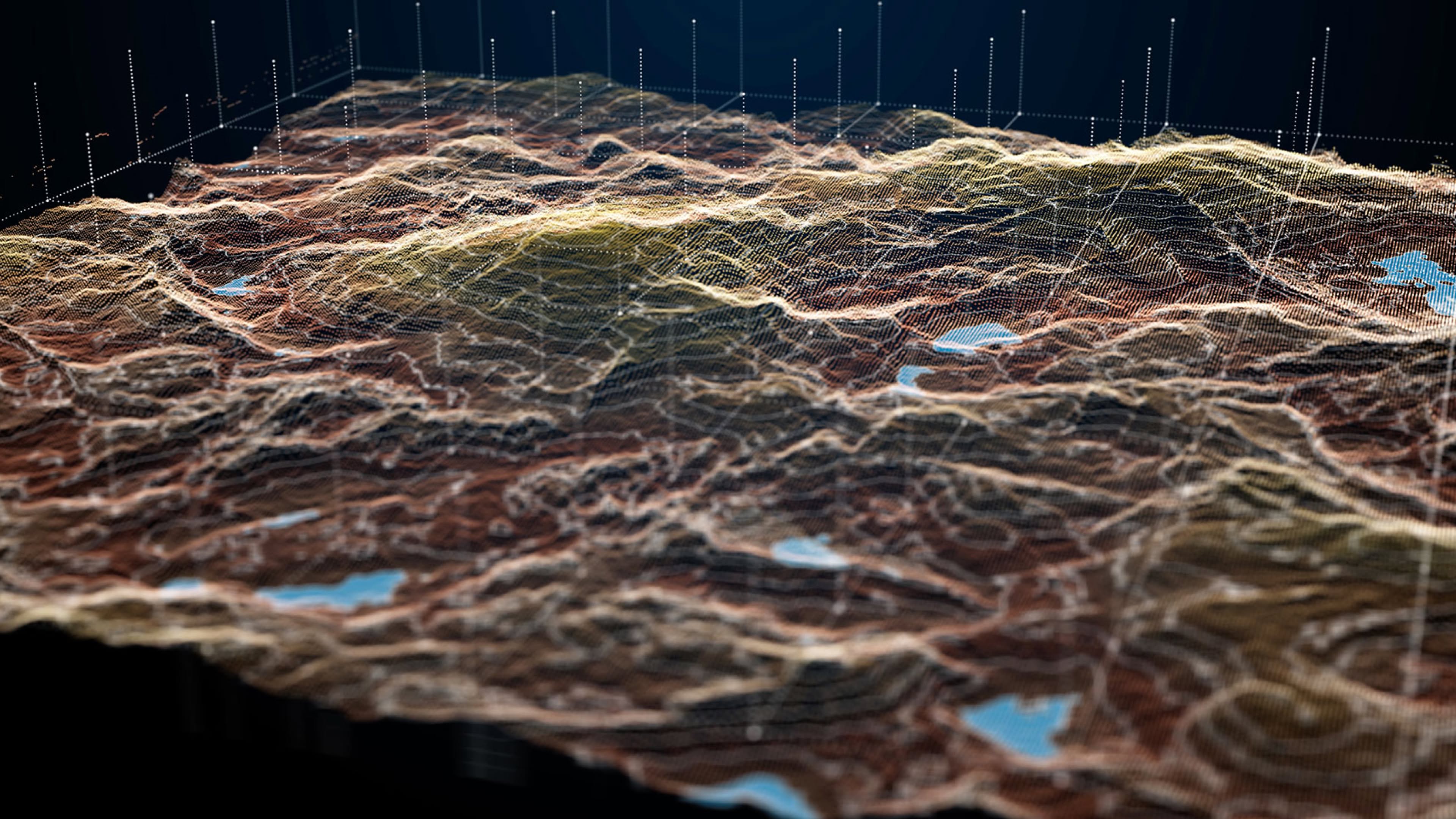
Software transformed the digital economy. The much larger opportunity now sits in the physical one — mining, manufacturing, agriculture, logistics, healthcare and the trillions of dollars of activity where AI has yet to reach its full potential because of the complexity of the physical world. Physical AI is the unlock.
We’ve had computer vision and industrial robots for years, but most deployed systems were rule-bound, brittle, bespoke, and expensive to scale. What’s changed is the convergence of foundation models, cheaper sensors, more reliable connectivity, and learning-based control. Systems can now interpret messy, dynamic environments and adapt in context, enabling autonomy to generalise across tasks, sites, and conditions. This inflection is arriving alongside powerful tailwinds: structural labour shortages, rising operating costs, and sustained margin pressure. Global robotics and automation spend sits at roughly $100 billion today and is projected to reach more than $400 billion by 2030.
This isn’t a new bet for us. Main Sequence has been backing physical AI since our inception, investing more than $100 million across the stack including in unicorn Advanced Navigation, Emesent, Presien and Andromeda. Our conviction is only deepening.
Physical AI is bigger than robots
“Physical AI” has quickly become synonymous with embodied intelligence. That’s just one slice. The full opportunity spans several parallel domains, each massive in their own right.
1. Embodied autonomy
From humanoids on factory floors to drones in underground mines, this is about robots and autonomous systems that can perceive, reason and act in the physical world.
The generalisation question looms large - can a single platform learn to perform almost any physical task? Truly reliable, general-purpose autonomy is likely a late-decade reality at the earliest. Hardware constraints around actuation, batteries and durability are improving, but incrementally. More fundamentally, the training data required to generalise across messy, dynamic physical environments does not yet exist at scale. And in many cases, it may not need to: large models that generalise across every possible task are not necessarily the best way to solve problems with well-understood constraints.
As the space continues to evolve, we back companies deploying embodied systems and creating value through this today. Emesent’s world-class SLAM algorithms enable autonomous mapping of underground mines. Andromeda is building personalised companions for aged care, developing the social intelligence needed to earn trust and drive real adoption. Sydekick has built efficient behaviour models that enable highly dexterous and adaptable robots to tackle complex tasks in areas like biomanufacturing — effectively building the deployment layer that turns advances in physical AI into systems that solve real-world problems.
2. Digitising and running the physical world smarter

Before you can automate a factory, mine or supply chain, you need to be able to see it. Many physical industries are still stuck at this step as standard vision breaks down in complex environments, while operational data remains fragmented across legacy systems, field notes and disconnected sensors.
Companies that create a reliable operational truth layer can turn this mess into auditable workflows that improve efficiency, safety and throughput. These systems become deeply embedded, while the data they capture compounds in value over time. As technologies like world models mature, that creates a path from visibility to prediction and, eventually, action. They already own the data substrate, workflow integration and customer trust that more intelligent systems will depend on.
Zabidou builds AI-native ultra-vision systems for advanced manufacturing environments where standard vision fails. Presien combines best-in-class vision models with LLM-driven insights into safety and performance for heavy industry. Lumachain has built world-leading vision systems that provide end-to-end visibility across the food supply chain. Plotlogic uses advanced sensing to deliver high-resolution material characterisation for mining.
3. Understanding and simulating spatial environments
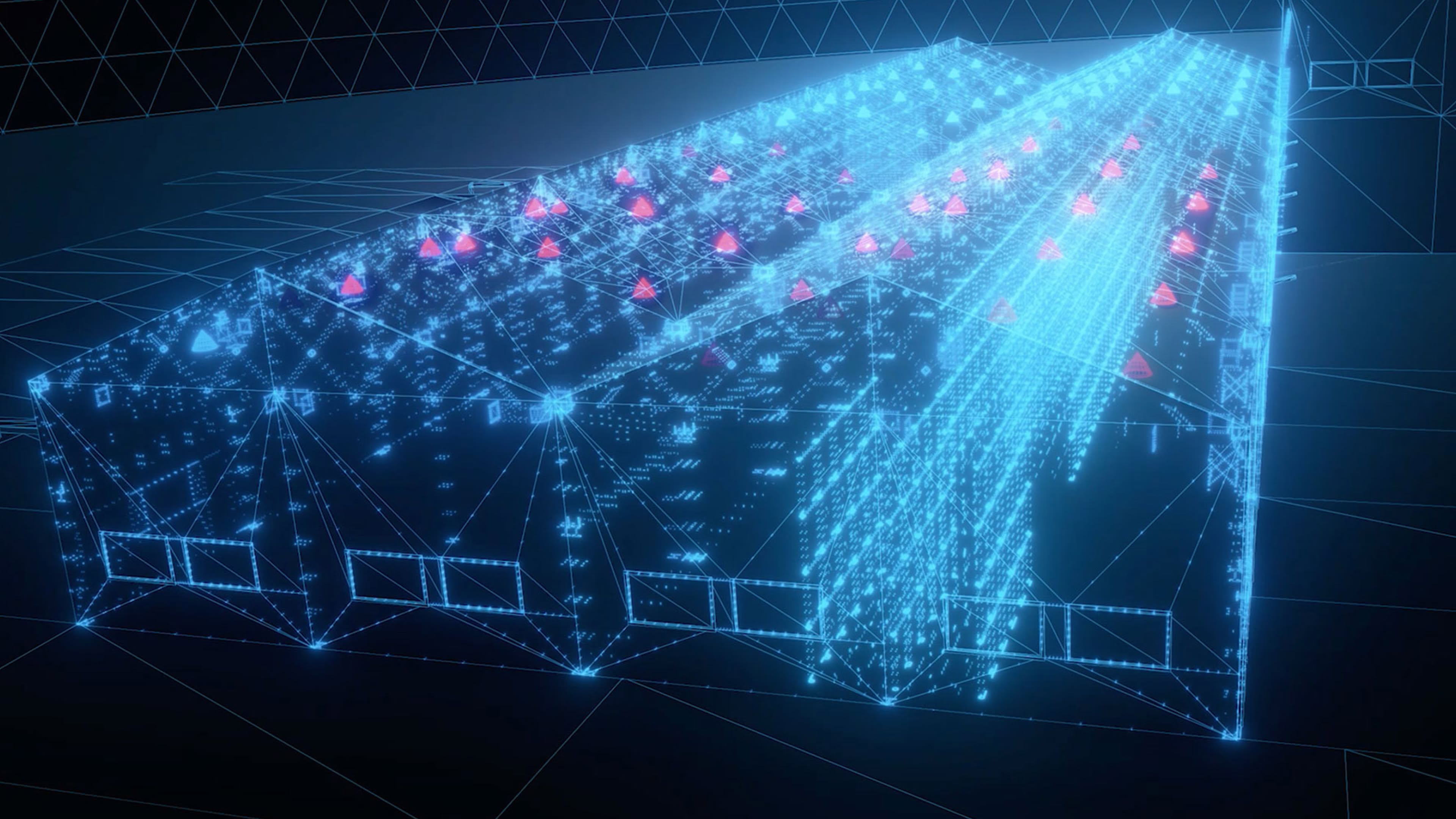
In a world of increasing complexity, the ability to map the physical world and simulate what happens within it will be a major enabler. It is where robots can learn before they deploy, and where physical industries can test decisions before committing billions of dollars in the real world.
Accurately representing complex spatial and temporal data — and making those capabilities accessible beyond the most technically sophisticated organisations — is foundational to physical AI. In our portfolio, Terria enables rapid data aggregation, digital twin creation and deep simulation across complex environments.
4. Building physical products faster
Before physical systems can be deployed at scale, they need to be designed, verified and iterated. Today, engineering workflows are constrained by scarce expert knowledge and fragmented toolchains. Across CAD, EDA and hardware verification, there is an opportunity for the same “agent moment” now reshaping software engineering — compressing design cycles and enabling much faster iteration on physical products.
5. Enabling technologies
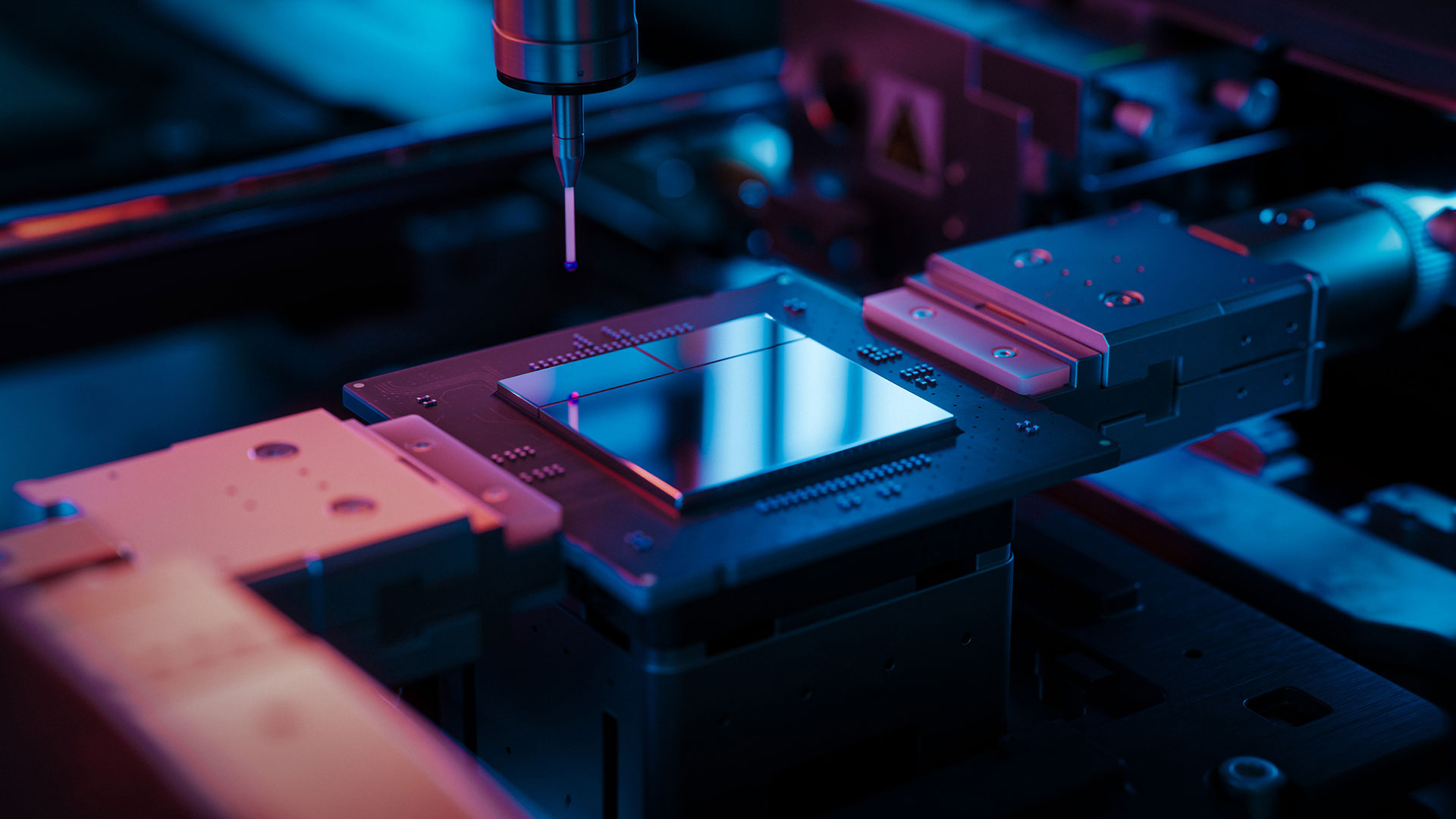
Physical AI depends on a set of enabling technologies beneath the application layer.
At the connectivity layer, physical systems need to communicate reliably in environments where traditional networks are weak, unavailable or too power-hungry. Morse Micro’s long-range Wi-Fi and Millibeam’s 5G/6G chips enable systems to stay connected across constrained and hard-to-reach environments.
At the compute layer, physical AI often cannot rely on the cloud. Latency, bandwidth, power and reliability requirements increasingly push inference to the edge. TernaryNet is building energy-efficient processors that allow AI workloads to run directly on devices.
Finally, at the model layer, Metacognition is extending what AI systems can reliably do over long periods of time — building the memory and reasoning capabilities required for persistent, high-stakes operation, with a robotics operating system as the first application of that technology.
These areas are parallel but deeply interconnected. A company digitising a factory floor creates the data substrate that autonomous systems will eventually operate on. A simulation platform that builds accurate digital twins accelerates both product design and robot training. The value chain is mutually reinforcing.
Value is unlocked with deployments.
In physical AI, it is tempting (and increasingly common) to bet on a particular architecture, data strategy or simulation approach. However, the technology is evolving too quickly for any one approach to be definitive. We back teams that understand the frontier, adapt as it moves, and stay focused on what it takes to deploy reliably in the real world.
Wherever a company starts — data, models or full-stack systems — long-term value tends to converge on deployability. A technical breakthrough only matters if it becomes a product customers can trust and use at scale.
We see this in companies like Sydekick, Emesent and Andromeda. Their advantage comes from being in the field, learning what actually works, and building around real customer constraints. That advantage compounds: every deployment creates proprietary data, trust and operational knowledge that is difficult to replicate in the lab.
What needs to be true to win through deployment.
Deployment advantage isn’t automatic. Across our portfolio, the companies that translate real-world presence into durable moats share a common set of characteristics.
Founder-market fit. Physical industries are operationally complex, risk-averse, and slow to procure. Founders who have worked inside these environments navigate them in ways outsiders can’t.
Defensible data flywheel. Proprietary data generated through real-world deployment compounds over time and remains valuable regardless of which underlying platform wins.
Workflow integration that creates switching costs. The best companies embed into the operational fabric of their customers, becoming the trusted partner when generalised intelligence arrives.
Multi-driver ROI. Financial returns matter, but safety improvements and structural labour constraints are often equal or greater motivators. Positioning against all three accelerates adoption.
Recurring revenue, not hardware margins. The most durable businesses use hardware as the distribution mechanism for software and data value, starting with a focused point solution, then expanding into a platform relationship that is structurally difficult to displace.
Why Australia
Australia is one of the world's best proving grounds for physical AI. Mining, agriculture, and logistics present operating environments that are remote, dangerous, and labour-constrained in ways few markets match. If your system works here, it carries credibility globally.
The research base — ACFR, Data61, AIML, QUT and ANU — is world-class and has seeded a generation of founders building from genuine technical differentiation. We already have proof that globally significant companies can emerge from this ecosystem, and a deep talent pool hungry to solve hard problems.
What’s needed now is the ecosystem to support that talent, accelerate company formation and scale, and establish Australia as a globally competitive physical AI cluster.
Come build with us
We are still at the beginning of what physical AI can become. The stack is evolving fast and there are many open questions across tooling, evaluation, deployment infrastructure, and more. We are continuing to learn and we think the investors and founders who stay close to the frontier while staying grounded in real-world deployment will be the ones who get this right.
If you’re a founder building in this space, we want to hear from you!
Written by

Danielle Haj-Moussa
Investment Manager
WHat to read next
.jpg)

Ben Hansky
October 7, 2025


Elaine Stead
July 15, 2025

Danielle Haj-Moussa
June 13, 2025
WHat to read next

Emerald Scofield
August 28, 2026


Tara Pereira
August 27, 2026
Danielle Haj-Moussa
August 10, 2026
Stay in Touch
