
Our investment in Cortisonic: Computing with sound waves to power the Edge AI revolution
February 2, 2026
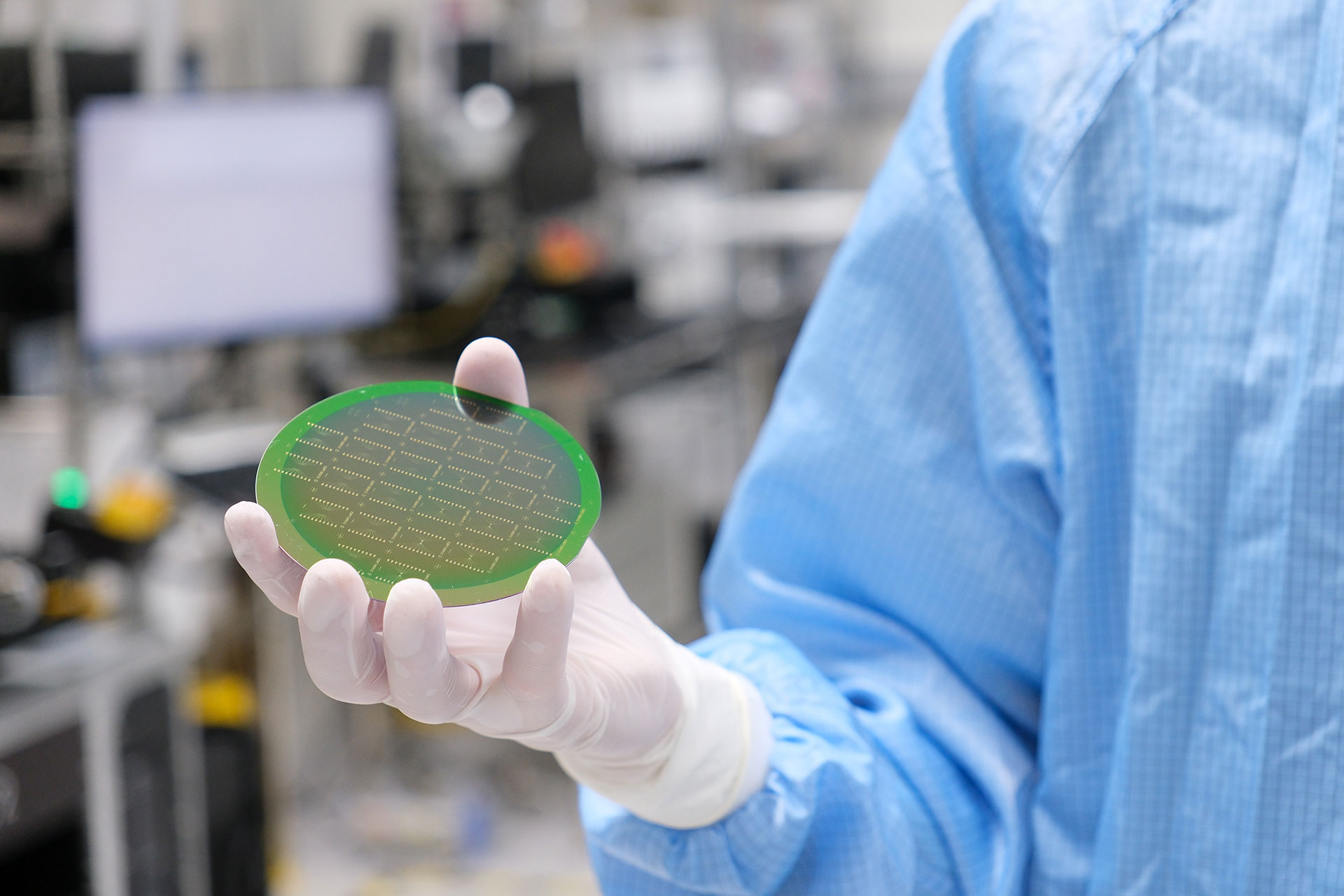
When I first walked into the laboratory in 2023, where Glen Harris and Chris Baker were working on research that began at the University of Queensland in 2017, it was immediately clear we were looking at something fundamentally different.
In a world driven by hype, unproven benchmarks, and claims about future AI capabilities, the Cortisonic team took me on a very different journey. They spoke about physics at its most fundamental level. About how the consequences of particle interactions themselves can carry information. About how, sometimes, the biggest shifts come not from scaling up complexity in the cloud, but from rethinking the smallest, most tangible building blocks of computation.
What they were describing was a new computational paradigm. One that uses sound waves, not electrons or photons, to process information.
Today, I’m excited to share that Cortisonic is emerging from stealth after several years in the making as Main Sequence’s latest venture science company, introducing the world’s first commercially scalable acoustic wave computing platform.
The energy wall
AI’s explosive growth has run headlong into a physics problem.
Global data centre electricity consumption is projected to more than double by 2030, reaching approximately 945 terawatt-hours, roughly equivalent to Japan’s entire annual electricity consumption. GPUs, CPUs, TPUs, even photonic chips all face the same underlying constraint: electron- and photon-based computing is inherently energy-intensive.
Much of the current conversation focuses on expanding cloud capacity. But there are deeper questions beneath that narrative. How does computation actually meet the physical world through the devices we use every day? What are the limits of those devices? And how do they possibly keep pace with the energy constraints that exist at every level of the system?
The next bottleneck is not just in the cloud. It is at the edge.
Self-driving systems, autonomous drones, wearables, smart cameras, industrial sensors, and defence satellites all require real-time intelligence in environments with strict power, thermal, and size constraints. These are places where GPUs simply do not fit.
This is the gap Cortisonic is filling, and critically, they do it using standard semiconductor manufacturing processes, the same ecosystem that already produces today’s chips.
A new computational element
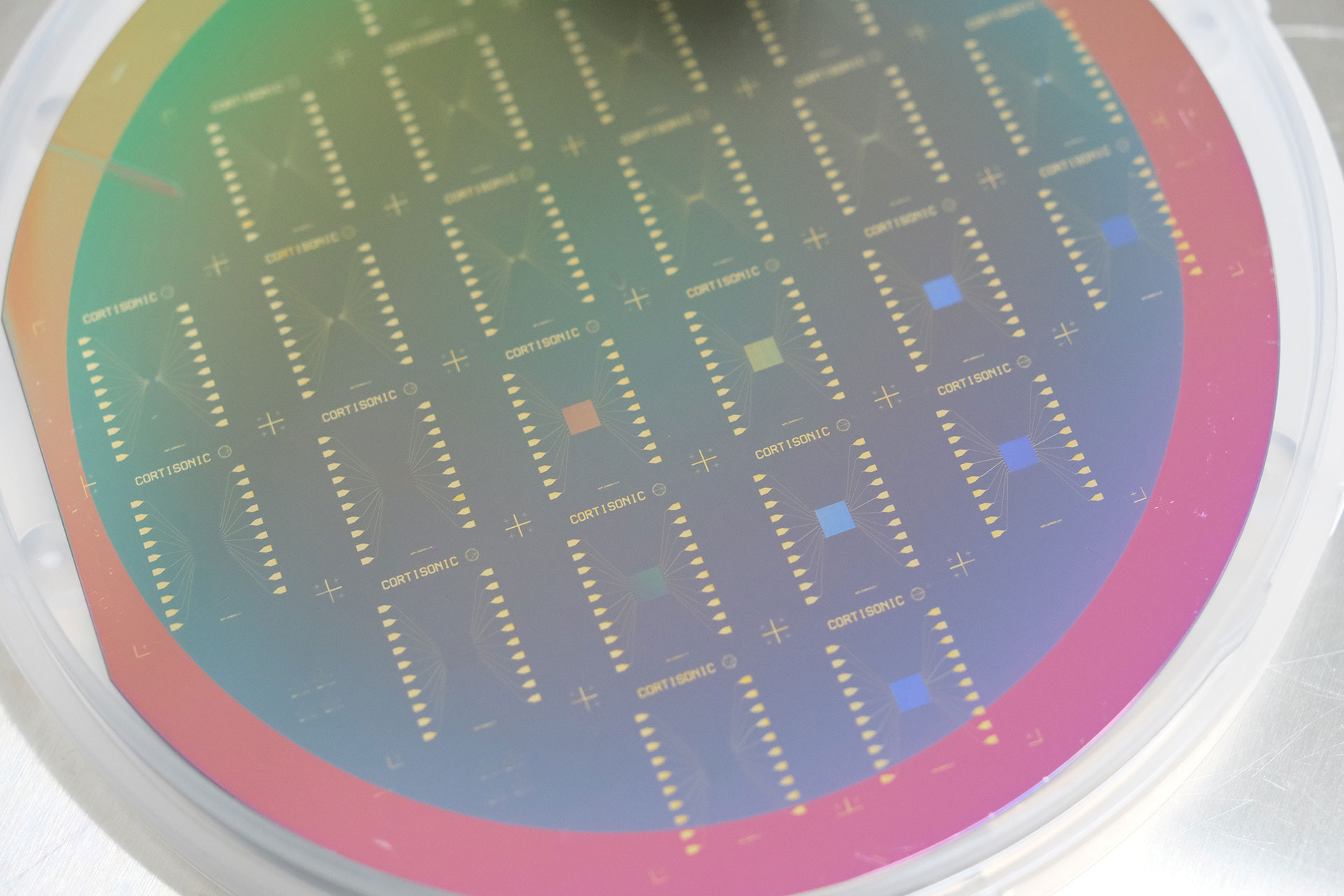
Cortisonic’s Sonic Processing Unit (SPU) uses guided sound waves — phonons — in silicon chips to perform specific classes of computation at dramatically lower energy than electronic or photonic systems.
This is not a general-purpose replacement for existing processors. Instead, it introduces a third computational tool alongside electrons and photons, purpose-built for tasks where time, memory, filtering, and energy efficiency dominate.
Globally, academic researchers have pursued phononic computing for years, but only in lab demonstrations. Cortisonic has cracked the commercial scalability challenge. The company has already manufactured a device with 10,000 interconnected phononic nodes using standard semiconductor fabrication processes — no exotic materials, no new fabs, no cryogenics.

Edge first, then everywhere
While data centre power dominates headlines, Cortisonic’s go-to-market strategy is laser-focused on Edge AI — a market projected to reach $270 billion by 2032.
The SPU could act as a physical compute substrate for early perception and sequence processing. Its strengths naturally align with domains such as vision, audio, ultrasound, vibration analysis, radar, and industrial sensing. These are applications where signals evolve in time, physics matters, and energy budgets are unforgiving. The logic is simple. Edge devices operate under constraints that make acoustic computing impossible to ignore. Power budgets under one to two watts, real-time processing where latency directly impacts system stability, and harsh environments like space, where radiation degrades conventional electronics.
Transformers excel at language. But the real world is not tokens. It is waves, vibrations, and signals evolving continuously in time.
From research to reality, a strategic partnership with Lockheed Martin
As CEO, Dr Glen Harris puts it: “You can’t put a data centre on a drone or into a wearable device.”
This philosophy underpins Cortisonic’s eight-year research collaboration with the University of Queensland and Lockheed Martin. Lockheed Martin isn’t only an investor — they’ve come onboard as a validation partner, focusing on space-based assets and defence applications where radiation hardness and ultra-low power consumption are mission-critical.
The company has already secured a $3.2 million contract under the Australian Department of Defence’s Advanced Strategic Capabilities Accelerator program, with plans to demonstrate Minimum Viable Capability within 24 months.
The Venture Science model in action
Cortisonic exemplifies Main Sequence’s venture science approach. This was a two-year spin-out process, carefully building the foundation for commercial success:
- Deep IP development: University-originated intellectual property from Queensland Quantum Optics Lab and Lockheed Martin, licensed through UniQuest
- Technical validation: Moving from lab demonstrations to early proof of manufacturability with 10,000-node devices
- Strategic partnerships: Securing Lockheed Martin as both investor and first customer
- Government support: Non-dilutive ASCA funding to de-risk early development
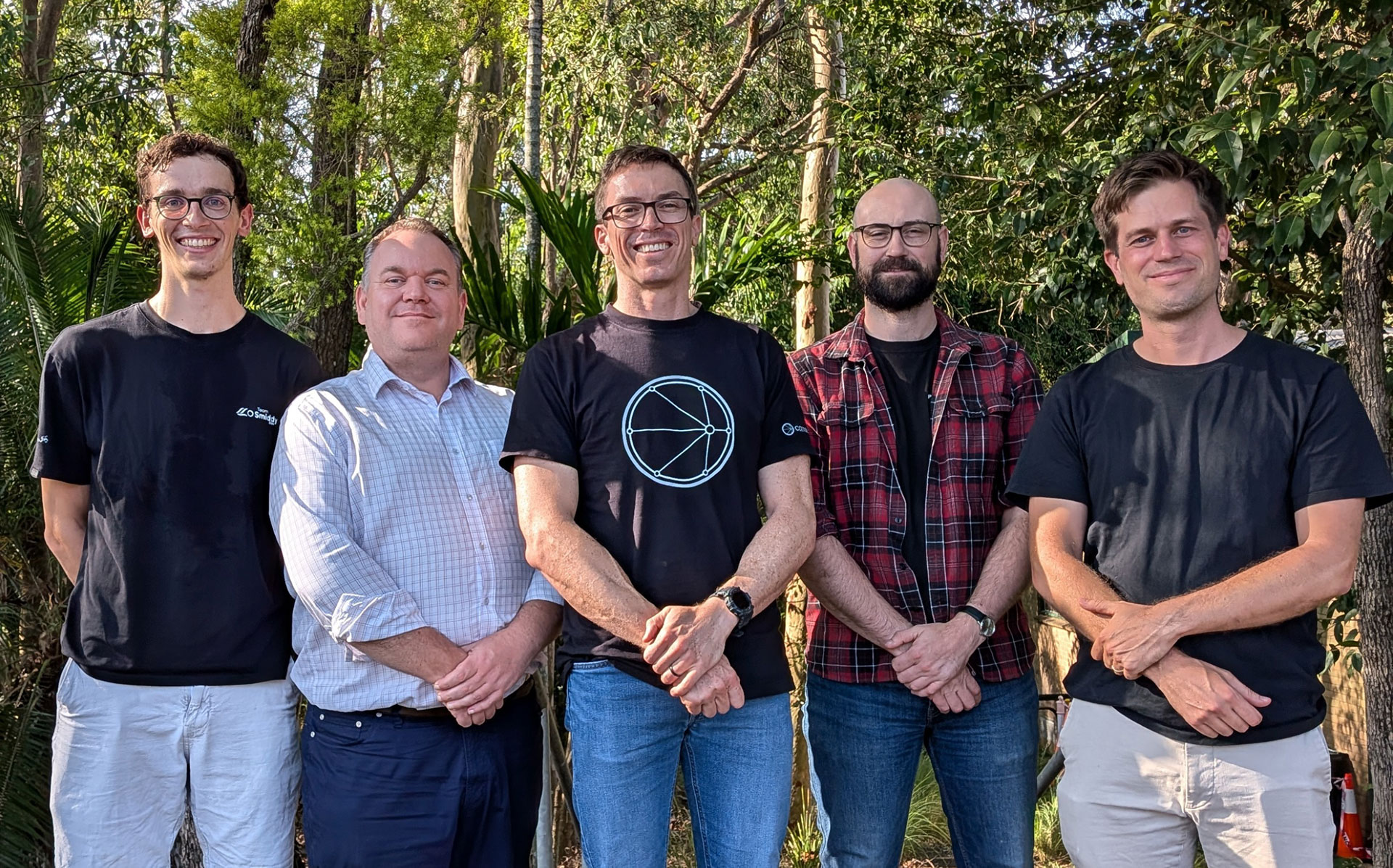
- Experienced leadership: Dr Glen Harris (CEO), Dr Chris Baker (Chief Scientist), and Dr Michael Harvey (CTO) combine scientific depth with commercial expertise
This is not rushing a science project to market. It’s about methodically translating world-class research into a globally competitive company.
Why this matters
Every major shift in computing has been enabled by fundamental advances in how we process information. We’re now at another inflection point.
AI will increasingly live in the physical world: monitoring infrastructure, guiding autonomous systems, supporting health, optimising industry, and enabling resilient defence capabilities. These deployments will far outnumber traditional cloud-based AI systems.
But they can only exist if we solve the power problem.
Cortisonic isn’t competing with GPUs in data centres. Instead, they are expanding the map of where AI can exist. Their SPU complements existing architectures by enabling intelligence in places conventional compute simply cannot reach.
This is not an alternative to deep learning. It is an alternative to wasting energy before learning even begins.
What’s next
With manufacturing validated, strategic partnerships in place, and government funding secured. The next 24 months focus on early product demonstrations and first commercial deployments with partners.
From there, the opportunity expands into adjacent edge and embedded systems, including autonomous platforms, industrial sensing, IoT, wearables, and other environments where power-constrained intelligence is critical.
This is deep tech at its best. Foundational research commercialised with patience and precision.. Strategic commercial validation from sophisticated customers. And a manufacturing approach that scales with existing infrastructure.
AI has been about bigger models. The next chapter may be about smarter substrates.
We’re proud to support Cortisonic as they reshape the future of edge computing, one sound wave at a time.
Written by

Alejandra Romero
Principal
WHat to read next
.jpg)

Ben Hansky
October 7, 2025


Elaine Stead
July 15, 2025


Danielle Haj-Moussa
June 13, 2025
WHat to read next

Emerald Scofield
August 28, 2026


Tara Pereira
August 27, 2026

Danielle Haj-Moussa
August 10, 2026
Stay in Touch
