Our investment in P3 State: Rethinking AI from the ground up


It is time to rethink AI economics
The cost of training frontier AI models has more than doubled annually, with the largest training runs projected to exceed US$1 billion in 2027. Meanwhile, spending on inference (the cost of running models) is expected to overtake training. Spending on AI infrastructure is forecast to reach US$521 billion in 2026, more than triple its 2024 level.
The dominant approach to improving AI capability has been to scale data and compute and this has created enormous and growing demand for infrastructure and energy.
Making frontier AI cheaper to train and run is critical to its long-term economics and to reducing the energy strain it creates. But the step change has to be massive to move the needle and maintain a meaningful advantage as frontier models continue to improve. Until now, efficiency gains of that magnitude have often come at the cost of model performance.
That is why Main Sequence has long believed in frontier AI companies that rethink the foundations of AI to deliver greater efficiency and greater capability.
This is where P3 State comes in. P3 State is rethinking AI from the ground up, applying a first-principles mathematical lens to how models are built. The ambition is a massive inflection in model efficiency, without compromising performance.
We are proud to announce that we have led P3 State's pre-seed round, alongside DCVC.
A world-class team
P3 State is led by Professor Simon Lucey, former Director of the Australian Institute for Machine Learning (AIML), who previously spent more than a decade as an academic at Carnegie Mellon University. During his time as Director, Simon helped scale AIML into Australia's largest AI research institute and a globally recognised leader.
I first met Simon through the accelerator program that Main Sequence ran with AIML. He was already an incredible figure in the Australian AI research community, bringing together top talent to work on some of the most pressing challenges in the field.
When Mike Zimmerman and I spoke with the P3 State team, we were immediately excited. The technology was compelling, the vision ambitious, and the team eager to get their work out into the world. But what stuck with me most was the clarity of their thinking. In a field with no shortage of bold claims, they could articulate exactly why their work mattered, what would need to be demonstrated for it to scale, and what it would take to build a globally significant company around it.
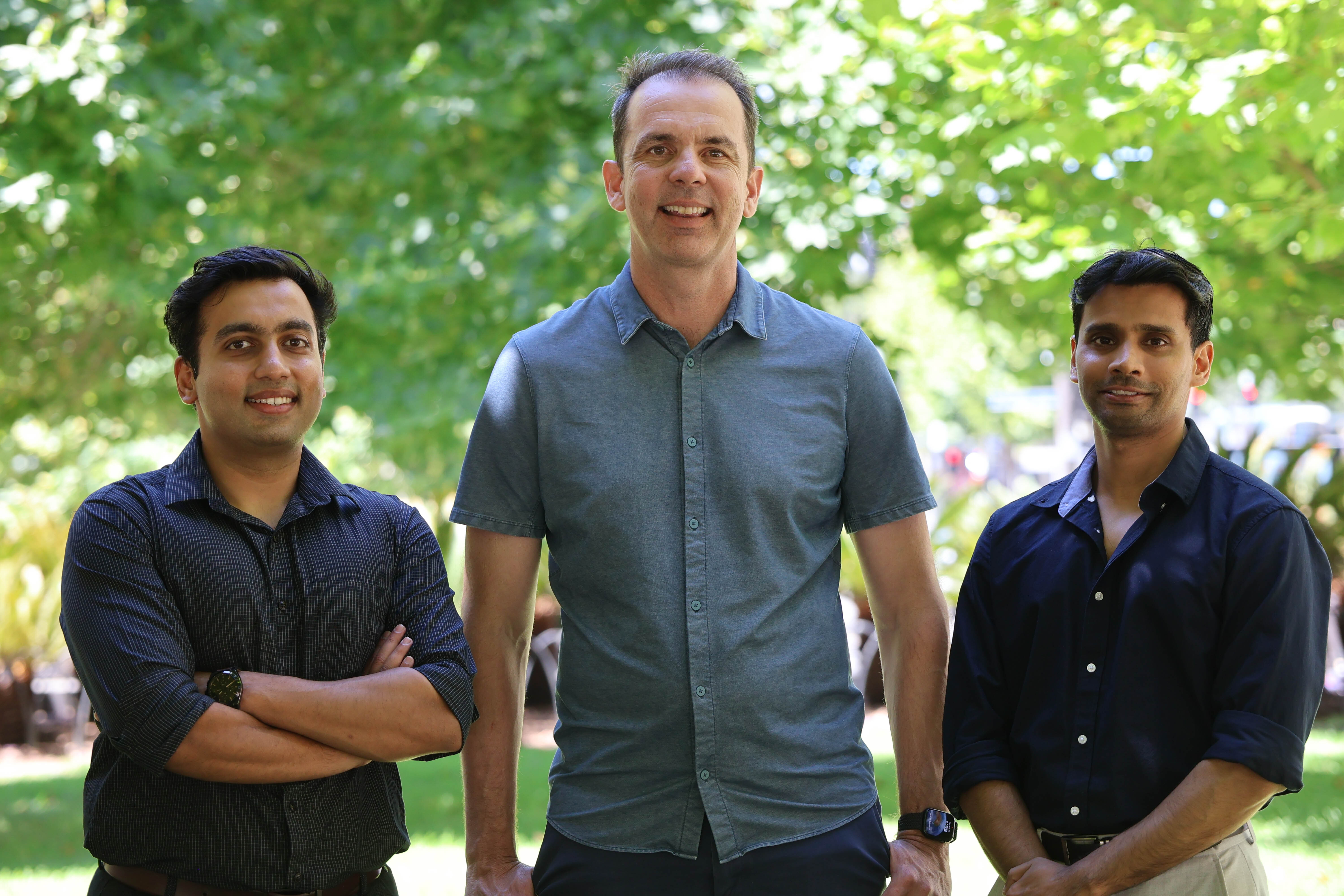
The founding team is incredibly talented, bringing in compatible skills for the next stage of the business. Dr Iain McCowan is a two-time deep tech founder with 25 years of experience in AI. Dr Arpit Garg has deep expertise in training large-scale models at both AIML and TikTok. Dr Hemanth Saratchandran brings foundational mathematical expertise from his time at Oxford and AIML.
Hemanth's story stayed with me. He believed the next wave of AI innovation would come from first-principles mathematics, found out about Simon’s work, and pursued the chance to collaborate with him. To me, it shows that Simon is not only a world-class researcher, but also a magnet for people who want to solve foundational problems.
This is a formidable team, assembled right here in Australia, taking on one of the biggest challenges in AI. It's exactly the kind of ambition and talent we are excited to back.
What’s next
P3 State is preparing for a world-first release of its technology in the coming weeks, just in time for NeurIPS, which is being hosted in Sydney this year!
The release will demonstrate the scalability and performance of their architecture, potentially opening the door to a new class of models that challenges a prevailing assumption in frontier AI: that more compute, more data and bigger models are the primary path to greater capability.
Beyond making existing AI applications more efficient and economically viable, breakthroughs of this magnitude could open up entirely new possibilities in areas like robotics and genetics, where model efficiency remains a significant bottleneck.
After the release, I'll share more about P3 State's approach and what it could mean for the future of AI architectures. Watch this space 👀
In the meantime, we're excited to welcome P3 State to the Main Sequence family!